







| Products | REF | Specification | Thickness | Width | Length |
|
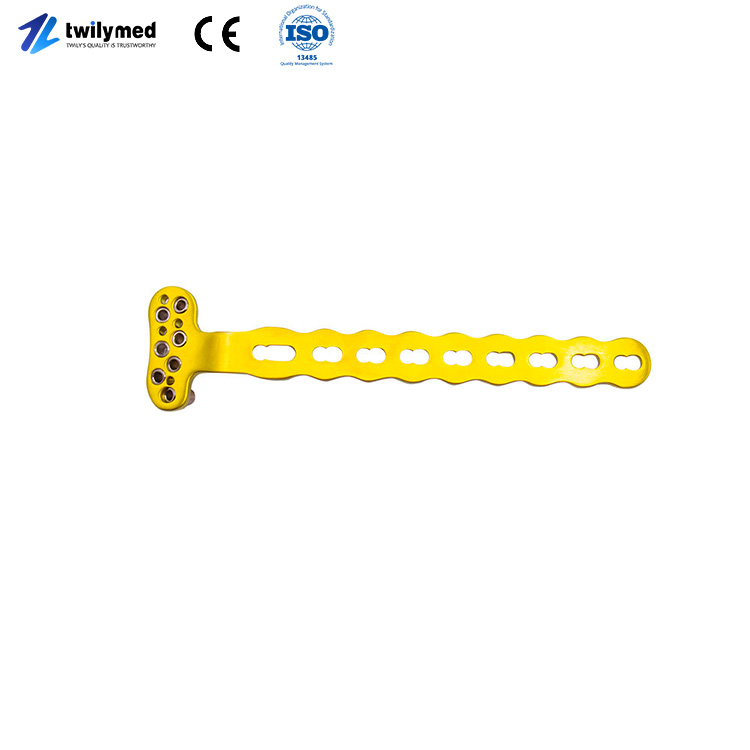
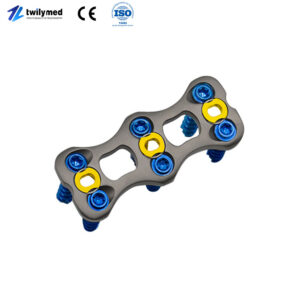
Distal Volar Radial Locking Plate With Drill Guide (Use 2.7 Locking Screw/2.7 Cortical Screw) |
TWIR01 | 3 holes L | 2.5 | 9 | 49 |
| TWIR02 | 4 holes L | 2.5 | 9 | 58 | |
| TWIR03 | 5 holes L | 2.5 | 9 | 66 | |
| TWIR04 | 7 holes L | 2.5 | 9 | 83 | |
| TWIR05 | 9 holes L | 2.5 | 9 | 99 | |
| TWIR06 | 3 holes R | 2.5 | 9 | 49 | |
| TWIR07 | 4 holes R | 2.5 | 9 | 58 | |
| TWIR08 | 5 holes R | 2.5 | 9 | 66 | |
| TWIR09 | 7 holes R | 2.5 | 9 | 83 | |
| TWIR010 | 9 holes R | 2.5 | 9 | 99 |
What is VA Distal Medial Radius Locking Plate?
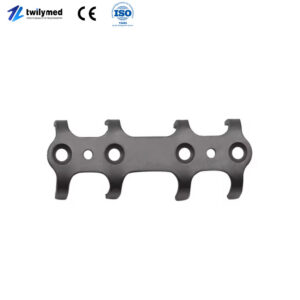
The distal ulna is an essential component of the distal radioulnar joint, which helps provide rotation to the forearm. The distal ulnar surface is also an important platform for stability of the carpus and the hand. Unstable fractures of the distal ulna therefore threaten both movement and stability of the wrist. The size and shape of the distal ulna, combined with the overlying mobile soft tissues, make application of standard implants difficult. The 2.4 mm Distal Ulna Plate is specifically designed for use in fractures of the distal ulna.
Features & Benefits
- Anatomically contoured to fit the distal ulna
- Low profile design helps reduce soft tissue irritation
- Accepts both 2.7 mm locking and cortex screws, providing angular stable fixation
- Pointed hooks aid in reduction of the ulnar styloid
- Angled locking screws allow secure fixation of the ulnar head
- Multiple screw options allow a wide range of fracture patterns to be securely stabilized
Available sterile only, in stainless steel and titanium
Features of DVR Plate with Drill Guide
The DVR plate with a drill guide has several unique features that make it an ideal implant for the treatment of distal radius fractures. These features include:
- Low profile design: The DVR plate has a low profile design, which reduces the risk of tendon irritation and increases patient comfort.
- Anatomically contoured shape: The DVR plate is anatomically contoured to match the shape of the distal radius, which ensures a better fit and reduces the risk of implant failure.
- Locking screw technology: The DVR plate uses locking screw technology, which provides improved fixation and stability.
- Drill guide: The DVR plate comes with a drill guide that ensures precise screw placement and reduces the risk of complications.
Surgical Technique
The surgical technique for the use of the DVR plate with a drill guide is as follows:
- The patient is placed under general anesthesia, and a tourniquet is applied to the upper arm.
- A volar approach is made to the distal radius, and the fracture site is exposed.
- The DVR plate is contoured to match the shape of the distal radius, and the drill guide is attached to the plate.
- The drill guide is then used to drill holes for the locking screws.
- The DVR plate is then placed on the distal radius, and the locking screws are inserted into the pre-drilled holes.
- The plate is checked for stability and fixation, and the wound is closed.
Advantages of DVR Plate with Drill Guide
The advantages of using the DVR plate with a drill guide for the treatment of distal radius fractures include:
-
- Improved fixation and stability
- Reduced risk of complications
- Precise screw placement
- Reduced operating time
- Low profile design for increased patient comfort
Reviews
There are no reviews yet.