


| Product | Picture | Ref | Specification | Screw |
| Tibial Plateau Lateral Locking Plate-III | 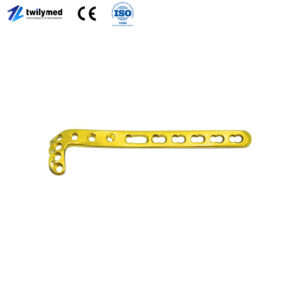 |
TWIT01 | 5 H R | HA3.5 HC3.5 |
| TWIT02 | 5 H L | HA3.5 HC3.5 | ||
| TWIT03 | 7 H R | HA3.5 HC3.5 | ||
| TWIT04 | 7 H L | HA3.5 HC3.5 | ||
| TWIT05 | 9 H R | HA3.5 HC3.5 | ||
| TWIT06 | 9 H L | HA3.5 HC3.5 | ||
| TWIT07 | 11 H R | HA3.5 HC3.5 | ||
| TWIT08 | 11 H L | HA3.5 HC3.5 | ||
| TWIT09 | 13 H R | HA3.5 HC3.5 | ||
| TWIT10 | 13 H L | HA3.5 HC3.5 |
Tibial Lateral Locking Plate-III: A Comprehensive Guide
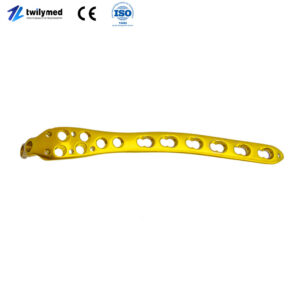
The Tibial Plateau Lateral Locking Plate-III represents the latest advancement in orthopedic implants designed to stabilize fractures in the lateral tibial plateau. With an emphasis on precision, enhanced mechanical stability, and biological compatibility, this plate has been engineered to meet the demands of complex fractures, particularly in high-stress areas like the knee joint. This guide will explore the features, concept, advantages, and future potential of the Tibial Plateau Lateral Locking Plate-III.
What is Tibial Lateral Locking Plate-III?
The Tibial Plateau Lateral Locking Plate-III is a state-of-the-art orthopedic implant developed for stabilizing fractures of the lateral tibial plateau. It is particularly effective in treating complex fracture patterns, including comminuted and intra-articular fractures. Combining advanced locking mechanisms with precise anatomical contouring, it supports robust fixation and minimizes the risk of secondary complications, such as joint instability or degenerative arthritis.
Tibial Lateral Locking Plate-III Features
Enhanced Anatomical Contouring
Designed to fit the natural curvature of the lateral tibial plateau, providing more accurate fixation and minimizing intraoperative adjustments.
Locking Screw Mechanism
Fixed-angle locking screws increase stability and prevent screw loosening, even in osteoporotic bone or complex fractures.
Modular Screw Configuration
Offers polyaxial screw holes, allowing for flexible screw placement and optimal biomechanical stability.
Durable Titanium Alloy
Composed of high-strength, corrosion-resistant titanium for long-term reliability and reduced risk of allergic reactions.
Pre-contoured Plate
Designed to match the tibial anatomy closely, providing more secure attachment and quicker placement during surgery.
Tibial Lateral Locking Plate-III Advantages
Anatomical design.The plate shape accommodate tibial anatomy, fits close to minimize soft tissue irration.
Articular multi-holes design.Convenient for fixing selection,with stable fixation.
Combination locking and compression holes (combi holes).Using angular stability or compression according to the requirments.
Limited-contact design.With advantages as preservation of blood supply to soft tissue and bone, reunion of the bone fractures,etc.
Tibial Lateral Locking Plate-III Treatment of Fracture Types
Comminuted Fractures
Provides stable fixation for complex fractures with multiple bone fragments.
Intra-Articular Fractures
Ensures that joint surfaces are restored to their original position, minimizing the risk of post-traumatic arthritis.
Osteoporotic Fractures
The locking mechanism ensures secure fixation even in weakened bone, reducing the risk of screw pull-out.
Depressed Fractures
Elevates and stabilizes depressed bone fragments to restore joint congruity.
Periarticular Fractures
Helps to stabilize fractures that extend into the joint, preventing misalignment and promoting proper joint function.
Risks of Tibial Lateral Locking Plate-III Surgery
Infection
Though rare, infections may occur and require immediate intervention to prevent implant failure.
Nerve or Vascular Damage
Due to the proximity of critical structures around the knee joint, there is a risk of nerve or blood vessel injury during surgery.
Hardware Complications
There may be issues with implant loosening, failure, or irritation, especially if the patient experiences excessive stress on the joint.
Soft Tissue Complications
Although the plate’s low-profile design reduces soft tissue irritation, there is still the possibility of tendonitis or other soft tissue issues, especially if the plate is not placed optimally.
Tibial Lateral Locking Plate-III Future Marke
The market for the Tibial Plateau Lateral Locking Plate-III is expected to grow significantly due to increasing demand for advanced orthopedic solutions, particularly in aging populations and active individuals. As technology advances, future iterations of this implant may feature more personalized, patient-specific designs, potentially manufactured using 3D printing or other innovative methods. Furthermore, the integration of bioactive coatings and smart materials may enhance osseointegration and reduce infection rates. The growing trend towards minimally invasive surgical techniques will further drive the adoption of this implant, making it a crucial component of modern
Reviews
There are no reviews yet.